

My young cat seems ill

Feline Infectious Peritonitis
Feline infectious peritonitis (FIP) is a serious and most often fatal disease affecting cats. It is most commonly seen in young cats between the ages of six months and two years. It has been found to affect male cats more commonly than females and purebred cats particularly the Asian breeds are more susceptible. It is characterised by fluid build-up in body cavities such as the chest and abdomen and neurological signs. It can affect all major organs and inevitably results in death. It may be referred to as Feline coronavirus polyserositis (wet or effusive form) or granulomatous feline infectious peritonitis (dry or non effusive form).
My pet has red urine - what does it mean?
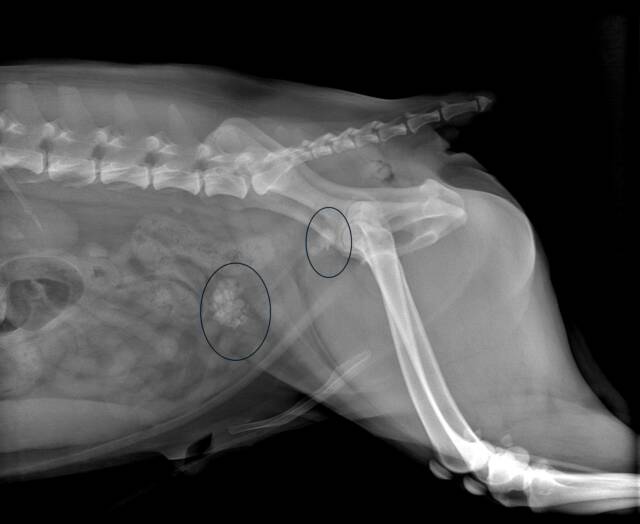
Bladder Stones
Bladder stones is a condition that occurs in dogs and cats of various ages, sex and breeds. Bladder stones are also called urinary calculi or uroliths. These are mineral like formations that form anywhere in the urinary tract, including kidneys, ureters, bladder and urethra. The most frequent location is the bladder.
"Crocodile Mite" skin disease in dogs and cats

Demodectic mange in dogs and cats
Demodex is a mite that lives in the hair follicles of most mammals. It is species specific which means that different types of animals, including humans, have their own type of mite. It is a normal inhabitant of the skin and is most commonly not contagious. The mite is usually passed on to puppies from their mother in the first 72 hours of life. The puppy's immune system usually copes to contain the mite but sometimes an overgrowth of the mites occurs and this is when symptoms of demodicosis also referred to as mange are seen. Mange is a collective name for skin disease caused by different types of mites of which the Demodex mite is only one.


